Drive Away Dolls, Bottoms and the dawn of the chaotic lesbian comedy era
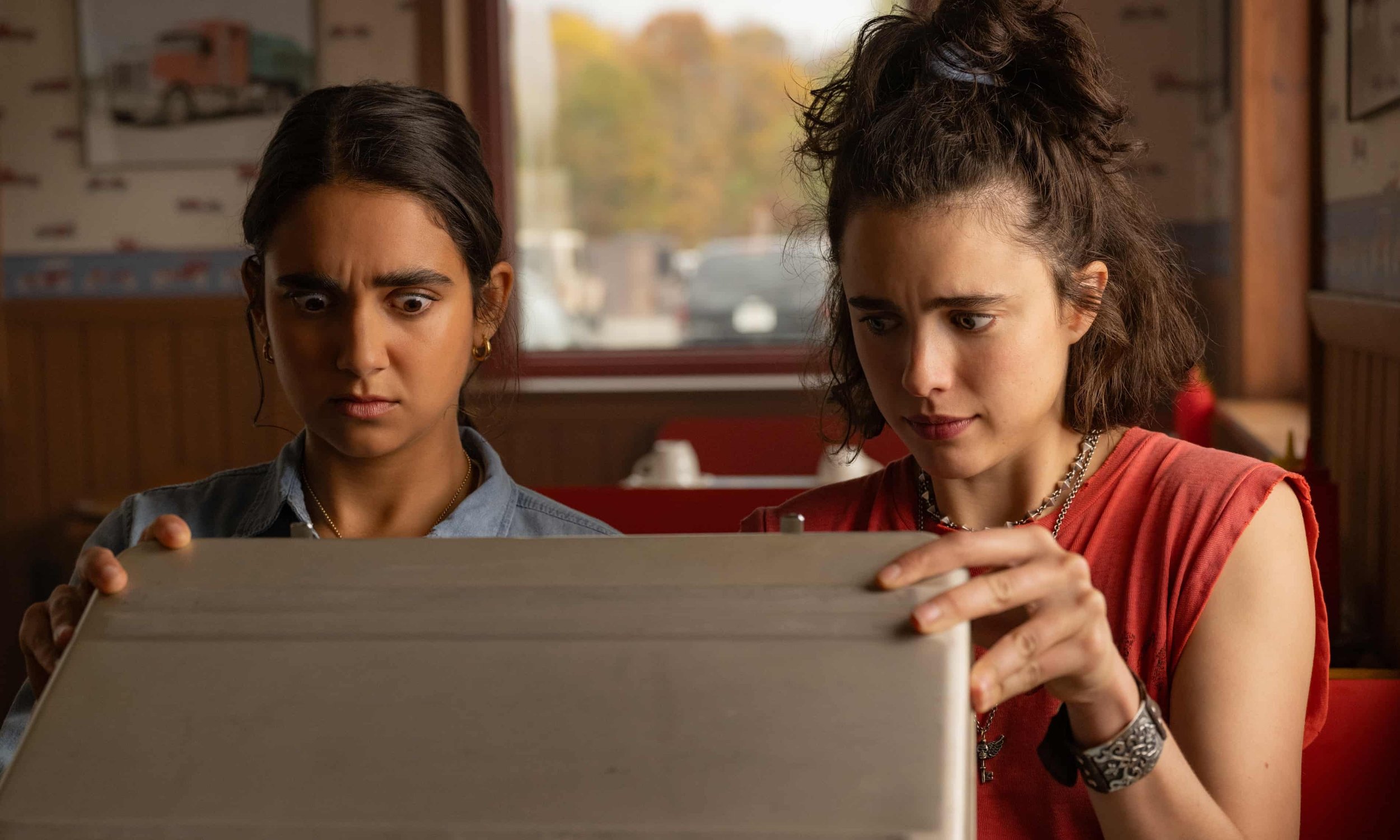
Drive Away Dolls (Photo: Wilson Webb/Working Title/Focus Features)
The lesbian film genre is nothing new. But the dawn of a characteristically messy, sexually-charged, comedic and violently chaotic sub-genre is turning the canon on its head.
“We teach a bunch of girls how to defend themselves, they are grateful to us, adrenaline is flowing, next thing you know, Isabella and Britney are kissing us on the mouth,” says Rachel Sennott excitedly in the 2023 lesbian comedy drama, Bottoms.
The film follows two unpopular best friends PJ and Josie who start a high school fight club to meet girls and lose their virginity. It’s a refreshingly unserious, hilarious, chaotic, violent, and most of all, lesbian, film.
Written by Emma Seligman (Shiva Baby), the film is the latest addition to a new genre of queer filmmaking, upending the traditional stereotypical lesbian comedy dramas (Seligman and co-writer Rachel Sennott originally developed the idea for Bottoms six years ago, but the script was rejected by “every studio bar one”.)
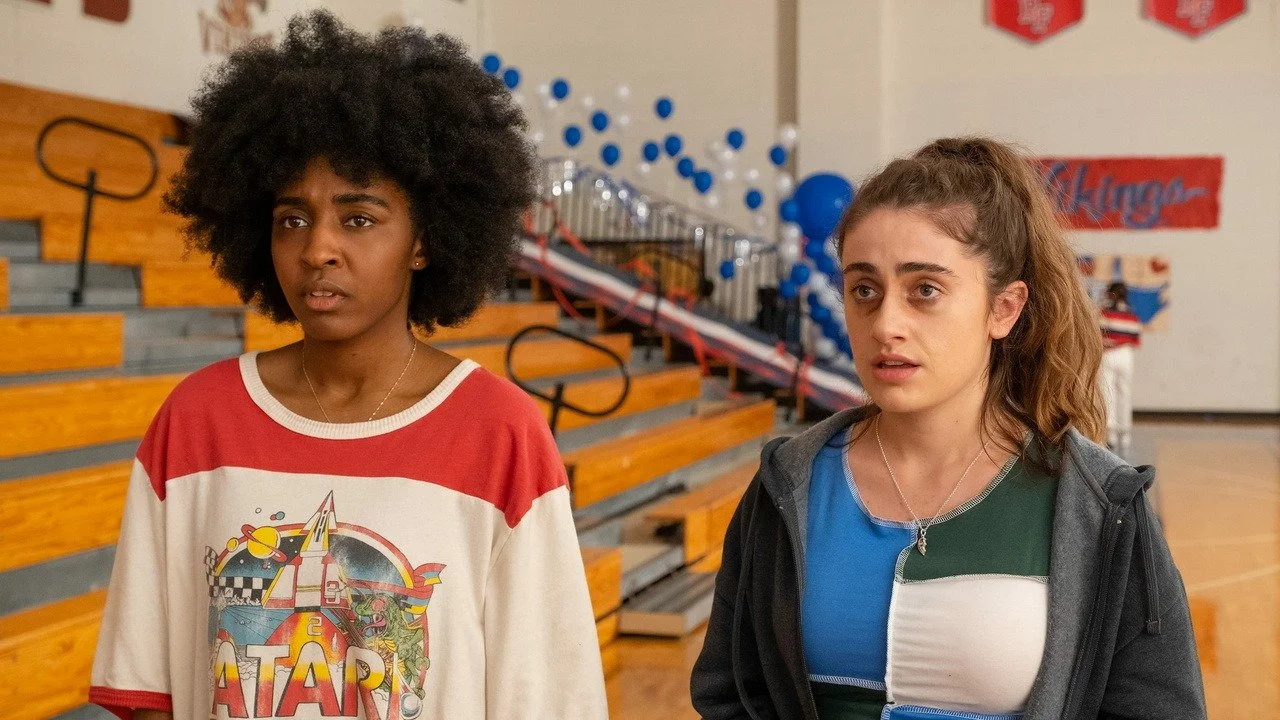
Bottoms (Photo: ORION Pictures Inc.)
The genre arguably began with Olivia Wilde’s 2019 Booksmart, and has now rapidly expanded with a clutch of films including Ethan Coen and Tricia Cooke’s Drive Away Dolls, Sielgman’s Bottoms and most recently Rose Glass’ neo-noir romantic thriller dark comedy film, Love Lies Bleeding.
There’s one defining factor of this new genre: These movies are made by women for women, and to go even further, queer women (Coen - one half of the Coen brothers) brought Drive Away Dolls to life from a script he wrote in the early 2000s alongside his queer wife Cook, who was inspired by a road trip with her high school friend).
But why now? Lesbian cinema is nothing new, but there's an outspoken, no-fucks-given, queer joy to this latest trend. Writing in The Conversation, Deborah Shaw, professor of Film and Screen Studies at the University of Portsmouth, notes that for almost 40 years, “lesbianism has gone unmarked and unnamed in mainstream film, only ever insinuated and mostly in negative ways”.
Lesbians were erased in the era of the Hays Code – a series of censorship guidelines for filmmakers which existed from 1930 to 1966. Robert Aldrich's The Killing of Sister George (1968) was one of the first same-sex features to be made in Hollywood after the code’s termination.
Indeed, even up until the 1980s, the vast majority of mainstream films about lesbians were made by men, including critically-acclaimed historical dramas like Todd Haynes’ Carol (2015) and Francis Lee’s Ammonite (2020) - Celine Sciamma’s Portrait of a Lady on Fire (2019) deserves an honourable mention here.
While these are all valuable contributions to the canon of lesbian cinema, they all hinge on a queer experience defined by themes of turmoil, secrecy and tragedy. As Deborah Shaw writes, “when lesbians gain access to the means of storytelling production, we demonstrate the humour and sense of play that has been missing in film, consigning the tragic trope to the bin.”
Think lesbian spy movie D.E.B.S (2004), But I’m a Cheerleader (1999), about a high school cheerleader whose parents send her to a residential in-patient conversion therapy camp to "cure" her, and sci-fi B-movie Codependent Space Alien Seeks Same (2011).
Fast-forward ten years, and the latest spate of movies are uniquely amoral, sadistic and violent, taking inspiration from the likes of David Fincher, Cronenberg, Ridley Stewart and Quentin Tarantino, but without the male gaze.
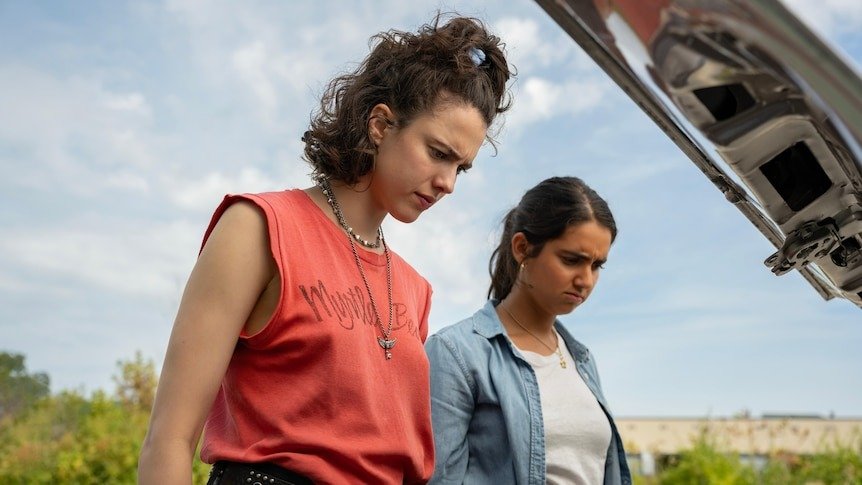
Photo: Wilson Webb/Working Title/Focus Features
Drive Away Dolls draws comparisons to Scott's Thelma & Louise, The 1991 film was known for its queer subtext, although neither Geena Davis nor Susan Sarandon plays a lesbian. But in Drive Away Dolls, Thelma and Louise’s difficult road trip and dramatic ending is turned on its head, as Margaret Qualey and Geraldine Viswanathan hilariously navigate mysterious suitcases, violent thugs, phallic objects and lesbian cheerleaders.
Speaking to Entertainment, Cooke and Coen said they wanted to see more “profoundly unimportant” lesbian movies. “It was important to me to make a movie that was a lesbian comedy because there aren’t many out there,” Cooke added. “I think it’s important that there are more queer comedies out there because we want to eat our popcorn and have fun at the movies, too.”
This new era of lesbian cinema is embracing all forms of queerness, and male-lensed, sexualised queer love is no longer the central focus of the canon. As Drive Away Dolls’ Margaret Qualey proudly announces: “I’ve had it with love, I just don't believe it's relevant to the 21st century lesbian.”