In Conversation: Caroline Hajny, director, Diary of a Ghost
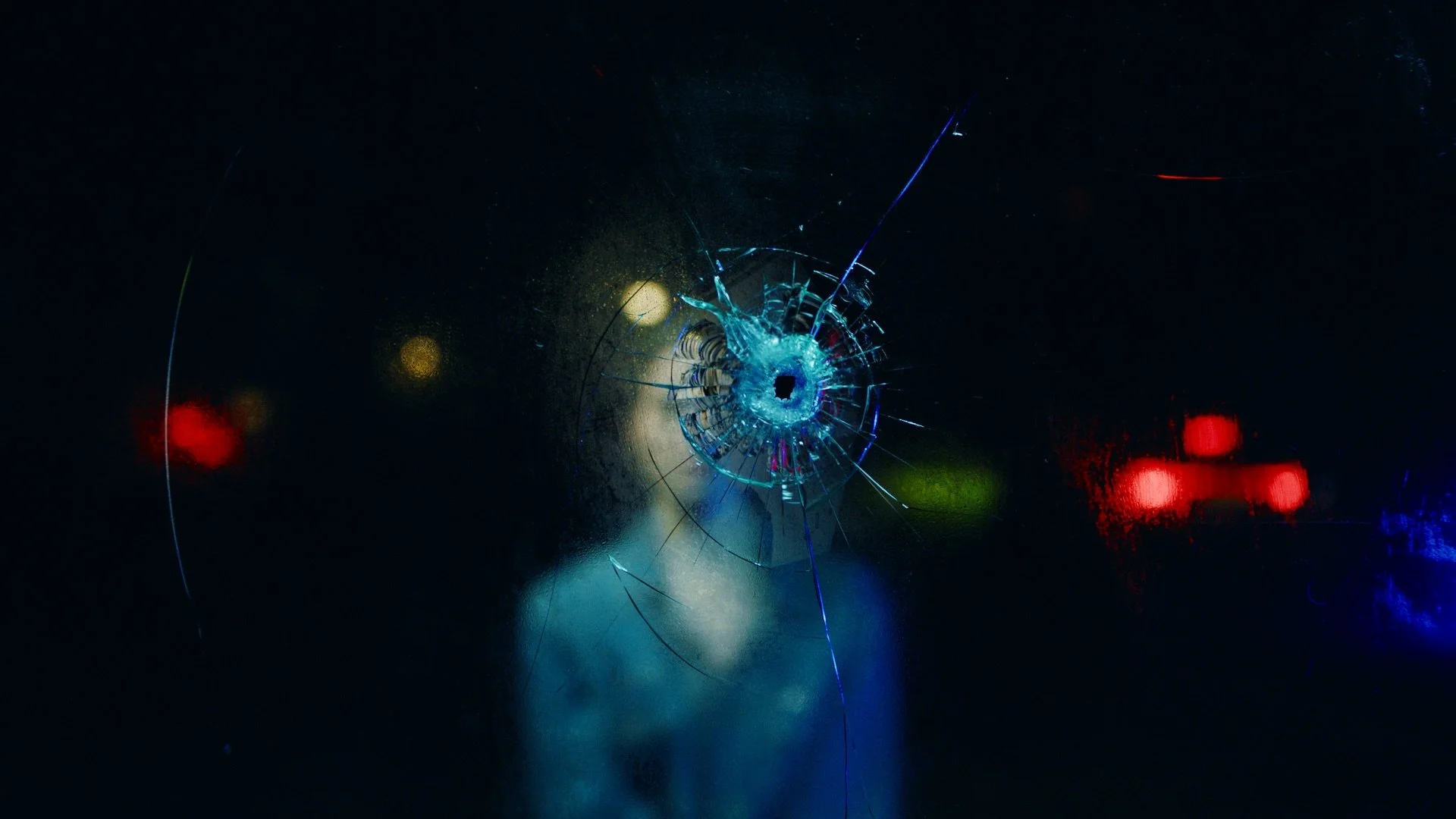
Diary of a Ghost (2024)
“As a director or producer it’s your duty to familiarise yourself with the work of creatives that aren’t just your ‘usual suspects’ - so when a job comes up you think of a female or non-binary person because of their skills and not because you have a box to tick.”
For our latest In Conversation, we’re excited to have had the opportunity to chat with London based director Caroline Hajny about her upcoming project Diary of a Ghost, a short film about grief set to premiere later this year.
Born and raised in Germany, Caroline relocated to the UK to pursue a career in film where she has been working across fashion, music and commercials, collaborating with brands and artists such as Puma, Tinder, Dua Lipa, Red Bull Racing, Barbour and Amazon.
Written by Maren Koenigs, Diary of a Ghost was inspired by a personal encounter with prolonged grief disorder, and delves into the poignant odyssey of Sage (Genevieve Chenneour), a young woman grappling with the profound loss of her first love, Riley (Alfie Noble) with Mia Rodgers starring as Sage’s estranged friend Hailey. Exploring the impact of grief on the human psyche, the film examines the universal yet uniquely personal experience of silently dealing with pain.
We’re so pleased to have been able to catch-up with Caroline about this project that is sure to be a hit on the upcoming festival circuit!
Hi Caroline, thanks so much for chatting with me today! Before we get into all things Diary of a Ghost, can you tell me more about your background and previous work as a director?
Thanks so much for having me! My path into directing is a bit all over the place. I knew I wanted to be a director and moved to London for uni, but left several courses early.
Simultaneously I started doing a bit of photography and worked as a camera trainee, which was a great opportunity to be on set and meet people in the industry - some of which I still work with to this day.
Photography opened the doors to fashion and music for me - I travelled to New York and Paris for fashion week, photographed concerts for Universal Music and even dabbled in documentary for a little while. Through those experiences I got to direct my first music videos.
Since then, I’ve directed campaigns for Puma starring Dua Lipa and Jack Grealish, Vinted, Red Bull Racing and Barbour to name a few.
Diary of a Ghost follows a young woman grappling with the loss of her first love and the grief that has inhabited her for a year. What was it about this narrative that sparked your interest in directing it?
Most of my favourite films are driven by very complex and flawed characters, whose actions and feelings take time to understand and figure out. Sage is exactly that: she’s incredibly complex, vulnerable and complicated. She’s in a state of extreme emotional turmoil and incredibly sensitive to her environment. A lot of things in the film are unsaid, a lot of feelings are internalised until they boil over. When I first read the script, the end completely took me by surprise, but when looking back I noticed many hints foreshadowing the end. It was something I noticed a lot when researching the themes as well - friends and family saying they only picked up on and managed to read the signs when it was already too late. That concept became a very central idea for us.
How has your experience in fashion, music and commercials influenced your approach to more narrative storytelling? Did your usual creative process change whilst working on Diary of a Ghost?
For me, working in other formats has been invaluable - it’s been a space for me to experiment, learn and explore my own voice and style. It’s helped me become a more confident director but also find collaborators and develop a relationship with them. My day to day directing work is a lot more fast paced, so it was an exciting challenge to spend so much time with the same story and characters and get to know them over a longer period. It’s incredible to see how much a story grows over time. I don’t often get to work with cast members so extensively, so that was probably the biggest difference but also a learning curve for me personally.
Your first short film Last Dance (2019) also explored themes of loss and acceptance – are these topics you’re naturally drawn to, or has that been a coincidence?
Funnily enough, I’ve not made that connection until you mentioned it! It wasn’t something I’d planned or actively sought out, but I think stories that centre around such complicated and emotionally charged themes are a rich ground for creatives to draw from.
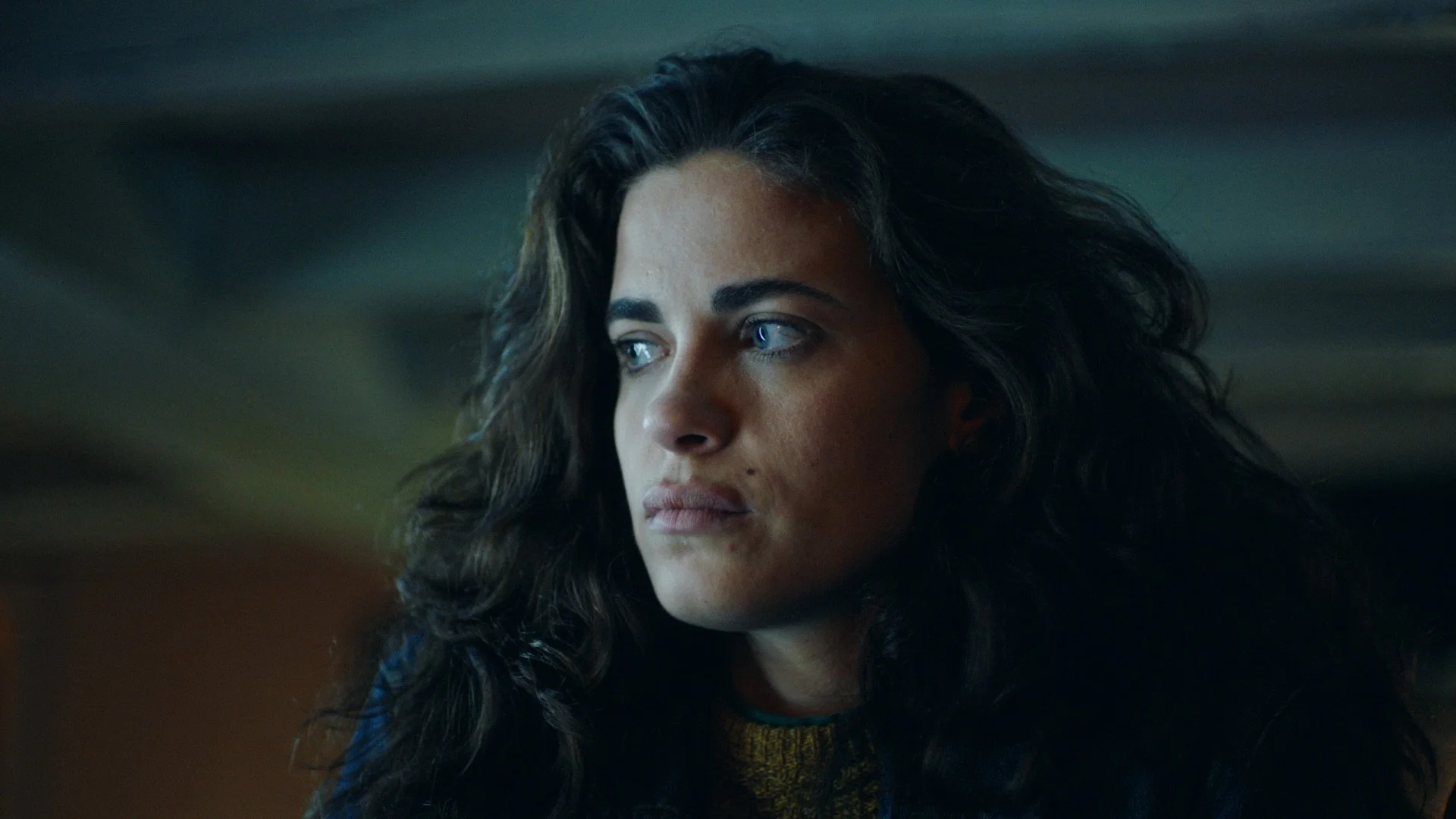
Genevieve Chenneour as Sage
Genevieve Chenneour (Sage), Alfie Noble (Riley) and Mia Rodgers (Hailey) all give incredibly moving performances. How did you approach directing them with it being such an emotionally-charged story?
Firstly, I couldn’t have asked for a more committed and wonderful cast to direct, they made the process of bringing these characters alive such a pleasure. Maren Koenigs, the writer, had come up with a lot of backstory for each character. We had lots of chats with Genevieve, - she was actually the first person to join the project, before we even had a producer! - about personal experiences we could draw from. I made a playlist for her, which I listened to a lot in pre production too to get into the right headspace - we actually ended up using one of the tracks as temp music in the edit!
The rehearsals were more of an open discussion, everyone brought their own ideas and interpretations to the table and we workshopped the characters together. For me it was more about building chemistry between them and aligning our understanding of their characters’ intentions and motivations than about seeing the scenes come alive just yet. We did a reading and some general blocking, but reserved the raw emotions for the shoot days - I wanted their performances to feel intuitive and not rehearsed. I tried to keep an element of that while shooting - for example, when shooting the sofa scene, I spontaneously asked Alfie to leave mid way through the scene. It took Genevieve by surprise and resulted in that heartbreaking sequence of her crying her eyes out - I was crying back at her from behind my monitor!
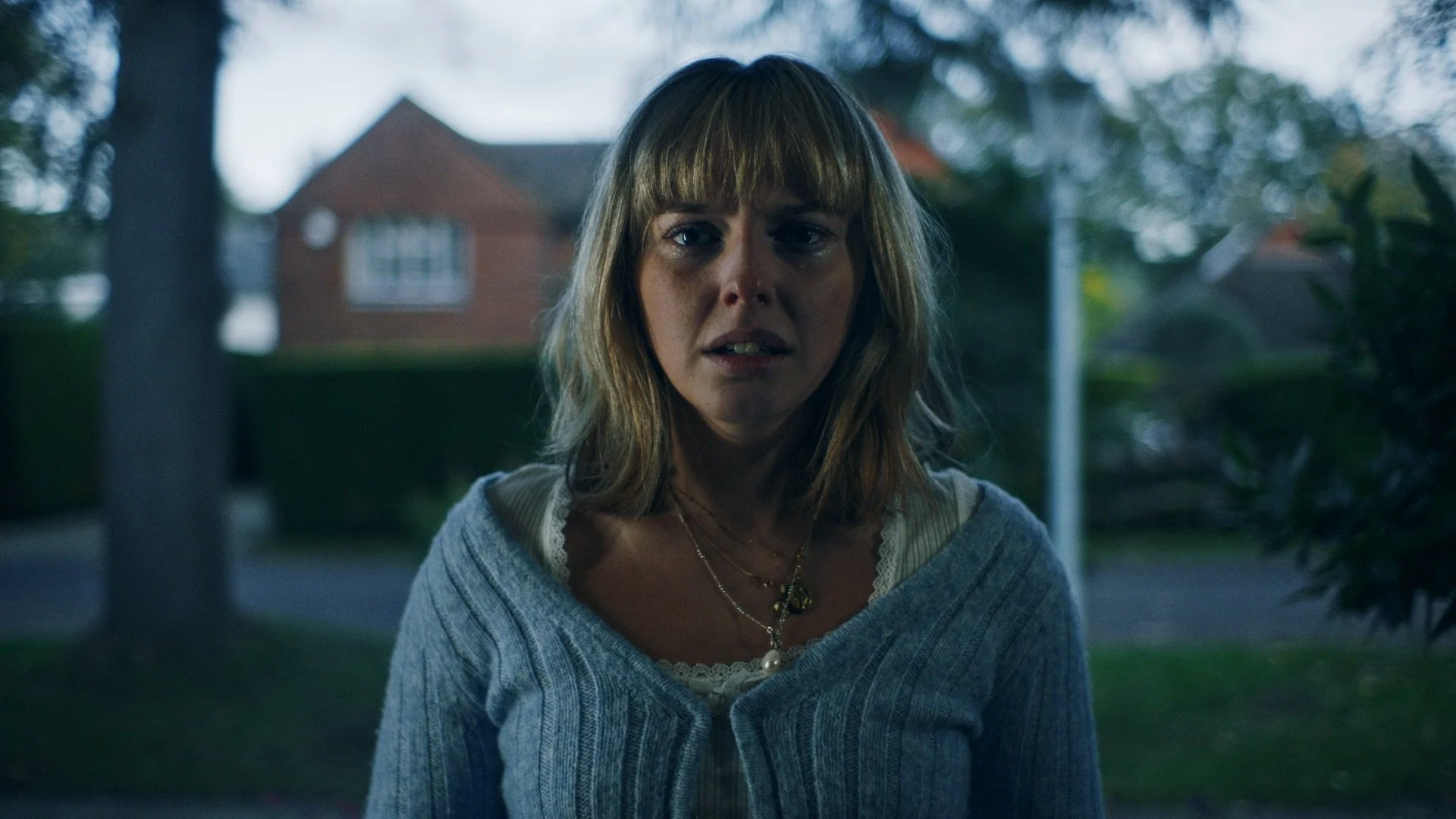
Mia Rodgers as Hailey
Incredibly, the cast and crew for this project consisted of over 50% women and non-binary people.
There’s a lot of counterproductive inclusivity going on in our industry - female crew get asked to work on ‘pink’ projects (your period product commercials, the women’s football team…), but get overlooked on, let’s say the men’s football campaign - which usually are projects with bigger budgets. When crewing up for Diary of a Ghost, I made a wish list of HoDs whose style resonated with me and most of them happened to be women and non binary people.
As a director or producer it’s your duty to familiarise yourself with the work of creatives that aren’t just your ‘usual suspects’ - so when a job comes up you think of a female or non-binary person because of their skills and not because you have a box to tick.
I recently read a statistic that female HoDs are more likely to champion female crew within their departments and that’s definitely something we saw on Diary of a Ghost happen as well.
What did you learn working on this project, and what do you hope audiences take away from Diary of a Ghost?
My biggest take away from this project would probably be to trust my gut more. A lot of the best decisions we made were very intuitive - especially when it came to bringing collaborators on board.
I hope audiences walk away from this film reminded that you truly never know what somebody else is going through. Grief is something that everybody has or at some point, will experience in their life, yet there isn’t a lot of support available.
Looking to the future, what kind of projects are you interested in working on, or are there any specific people you’d love to work with?
For me, and probably most people, a project always has to tick at least one of three boxes: creatively appealing, an opportunity to work with someone exciting or, let’s be honest, a healthy pay cheque. That hasn’t changed, but I hope Diary will bring more narrative projects into that mix. I’m really drawn to films and series that fuck with your brain a little bit and tap into surreal or even sci-fi elements, so I’d love to explore narratives that embrace that.
I love that. Thanks so much for chatting with us, Caroline!
Watch the official trailer for Diary of a Ghost below: