The female directors using film as resistance in Mexico
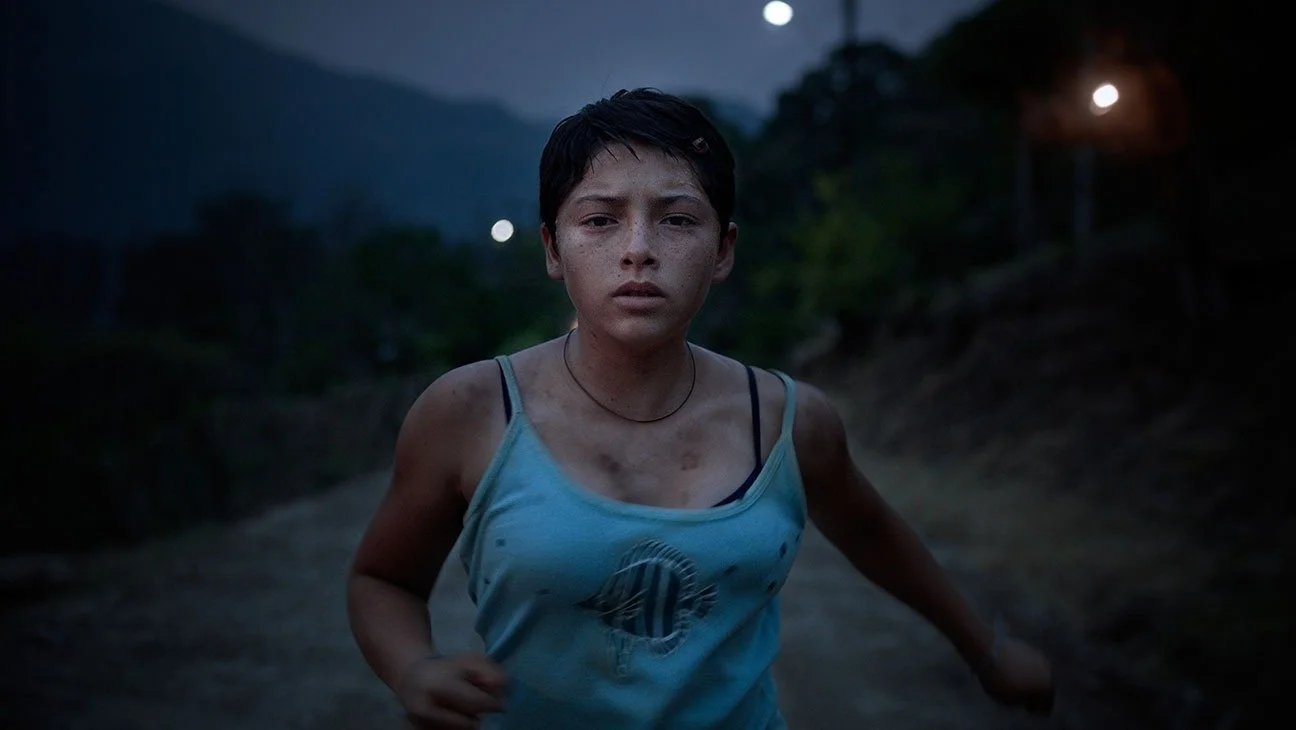
Prayers For the Stolen (2021)
In a country where ten women and girls are killed every day, Mexican female filmmakers like Tatiana Huezo and Fernanda Valadez are responding with powerful cinema
In Prayers for the Stolen, a mother tries to protect her daughter from the advances of drug cartels in the village of San Miguel, Jalisco, who are known to kidnap girls in the night. The mother cuts her daughter’s hair short like a boy, scolds her for wearing lipstick, and digs a hole resembling a grave in the ground for her daughter to hide in when the cartel comes.
An adaptation from the 2012 novel by Jennifer Clement, Mexican-Salvadorian director Tatiana Huezo’s subtle and disquieting film, released in 2021, is a powerful alternative exploration of Mexico’s drug cartels and human traffickers, revealing the relationships between mothers who try to protect their young girls from the inevitable effects of the world in which they inhabit.
An Amnesty International report released in September 2021 found that ten women and girls are killed every day in Mexico, and according to the UN, official records in Mexico indicate that there are currently 115,000 people whose whereabouts are unknown, but the actual figure could be much higher. Most of these disappearances coincide with the beginning of the war on drugs.
Rampant corruption, ineffective government action, and widespread collusion between the Mexican authorities and the drug cartels has meant families have to take matters into their own hands. Dozens of collectives have been created to search for disappeared persons in Mexico over the last 15 years, with most led by the mothers.
As an article by the United Nations puts it: “The people who search for the disappeared, who are mainly women, in practice have become forensic experts as well, identifying the type of soil, the humidity, the smells. In addition to this, they receive tips, often anonymously, about the possible location of bodies, and coordinate field searches and support each other.”
Prayers for the Stolen is part of a growing crop of contemporary films by women in response to the country’s alarming rates of femicide, and is part of a wider cultural feminist movement in Mexico. In their films, directors like Huezo and Fernanda Valadez create case studies for the love, dignity, resistance and resilience that allow their female protagonists to survive despite the horrors they have faced.
Tempestad, an earlier film from Tatiana Huezo, explores the lives of two women victimised by corruption and injustice in Mexico, as they document their emotional journeys: one has just been released from prison where she was kept by the drug cartel, and the other is a mother who refuses to stop searching for her missing daughter, despite threats from the authorities. In this narrative-driven docu-drama, the women’s voice overs are overlaid with mundane shots of the country’s roads, bus stations, markets, cities and border crossings.
Mexican film director Natalia Beristáin’s 2022 film, Noise, is a searing account of a mother’s attempt to find her missing daughter, after the authorities refuse to help. In doing so, she discovers another world, where Mexican mothers, daughters, sisters, nieces and cousins take up the fight to find their loved ones.
Noise blurs the lines between documentary and drama, touching on events like the 8M protests which take place every year on March 8 to protest violence against women and girls, and also groups like Voz Dignidad Por Los Nuestros SLP A.C, a civil association that helps families search for missing persons. Indeed one of the organisation’s main search techniques is to look for clandestine graves in abandoned areas near the San Luis Potosi area.
The lives of women are also intertwined in Mexican-Bolivian filmmaker Natalia López Gallardo’s 2022 film Robe of Gems, an unsettling debut about three women from different social classes who became tragically involved with a missing person case tied to organised crime.
In Mexican director Fernanda Valadaz’s Identifying Features, written by Astrid Rondero, a mother travels across Mexico in search of her son, whom authorities say died while trying to cross the border into the United States. Conjuring horror and heartbreak, Valadez delicately weaves elements of magical realism and folk horror to this heart-rending story of the very real violence faced by migrants. Magdalena, played by Mercedes Hernández, is taken down road after road in the search for her son Jesús, who left home in search of a better life across the border, but does not give up her fight, instead befriending a teenage boy called Mugel, who has just been deported from the US. Its powerful portrayal of a mother’s love and rage and a teenage son’s loss and maturation creates a rich emotional tapestry of the interweaving lives of those affected by the violence.
Speaking to Latino Life about making Identifying Features, Valadez said: “I think that when you talk about these visible social and political issues and you tell the story from the social perspective, then instead of feeling close to the characters, you become distant… because you see if from your head and not from your emotions. What I wanted to do was… use empathy and concentrate on the emotional journey so that you can feel for the characters instead of ‘thinking’ about them.”
Filmmakers like Huezo and Valadez also use the motif of women’s connection to nature to explore ideas of femininity and violence. Whether it's the vast plains of the Mexican desert the women trek across to find their sons, the cacophony of sound in the forests in which they live, the rumbles of thunder and the blistering sun away from which they hide, or the fields of poppy and plumes of smoke among which they toil, women’s relationship with nature is symbiotic and tender, in direct opposition to the masochistic brutality of nature caused by the war on drugs.
Mexico’s female directors are also tackling ideas of masculinity and gender in and among the cartels and its effect on women head on. Four years after making Identifying Features, Valadez released Sujo, a coming-of-age crime drama about a young boy, who goes to live with his aunts after his father, a member of a Mexican cartel, is assassinated. It explores the struggles of growing up without a father, and the codes of masculinity and gender that become internalised by young boys. Here, men and boys of Mexico’s drug war don't exist in vacuums, but as affecting beings, with a real impact on their female counterparts. Valadez allows these women to carve their own paths for justice and identity against this volatile backdrop.
In a recent interview with Sense of Cinema, Valadez discusses her role as a filmmaker operating in this space:
”That is the underlying theme we care about as female filmmakers and as part of a minority in Mexico. Empathy and sorority are perhaps one of the pillars that keeps Mexican society together in the midst of all this violence. We see this in the mothers, the sisters, and the daughters of missing people and activists who make families that go beyond genes and blood. What we are trying to say is that what women can offer is an alternative to violence and frustration.”
Ultimately, in films like Prayers for the Stolen, Identifying Features and Noise, women and girls are foregrounded, as the ones who must navigate the constant threat of danger around them. Huezo, Valadez and Beristáin speak truth to power in their films’ ability to capture the emotional forces of violence. Instead of relying on the physical and bloody manifestations of war, they lean into the internal battles of women, and violence’s residual effects. In doing so, they offer emotional agency as a form of resistance in a world which continually attempts to deprive women of their bodies and femininity.