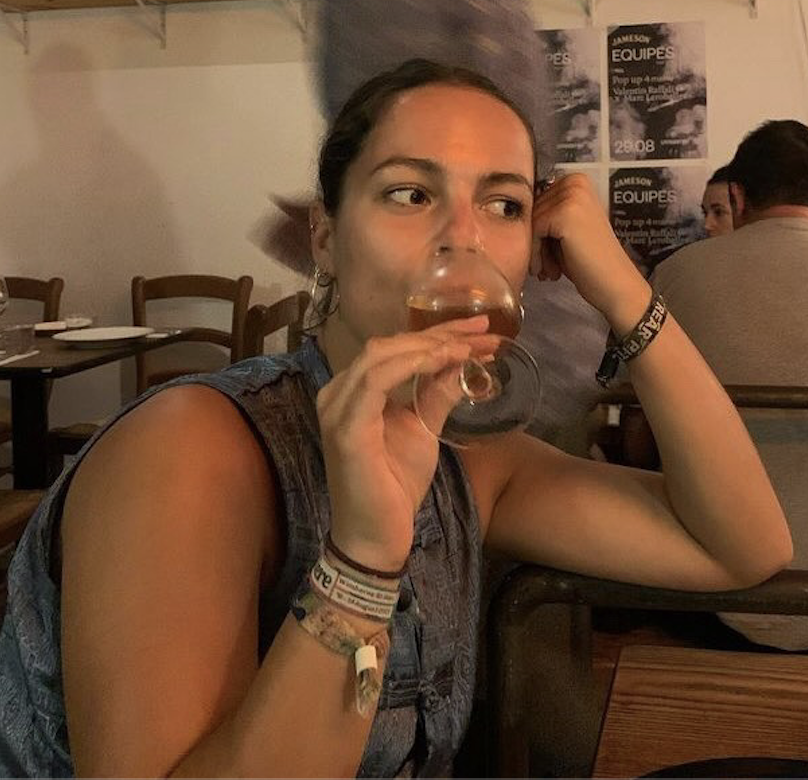
‘This is such an important and urgent story’: Director Ruby Phelan on her new short film
Phelan’s seven minute film is a powerful and timely exploration of the impact of war on women’s reproductive rights.
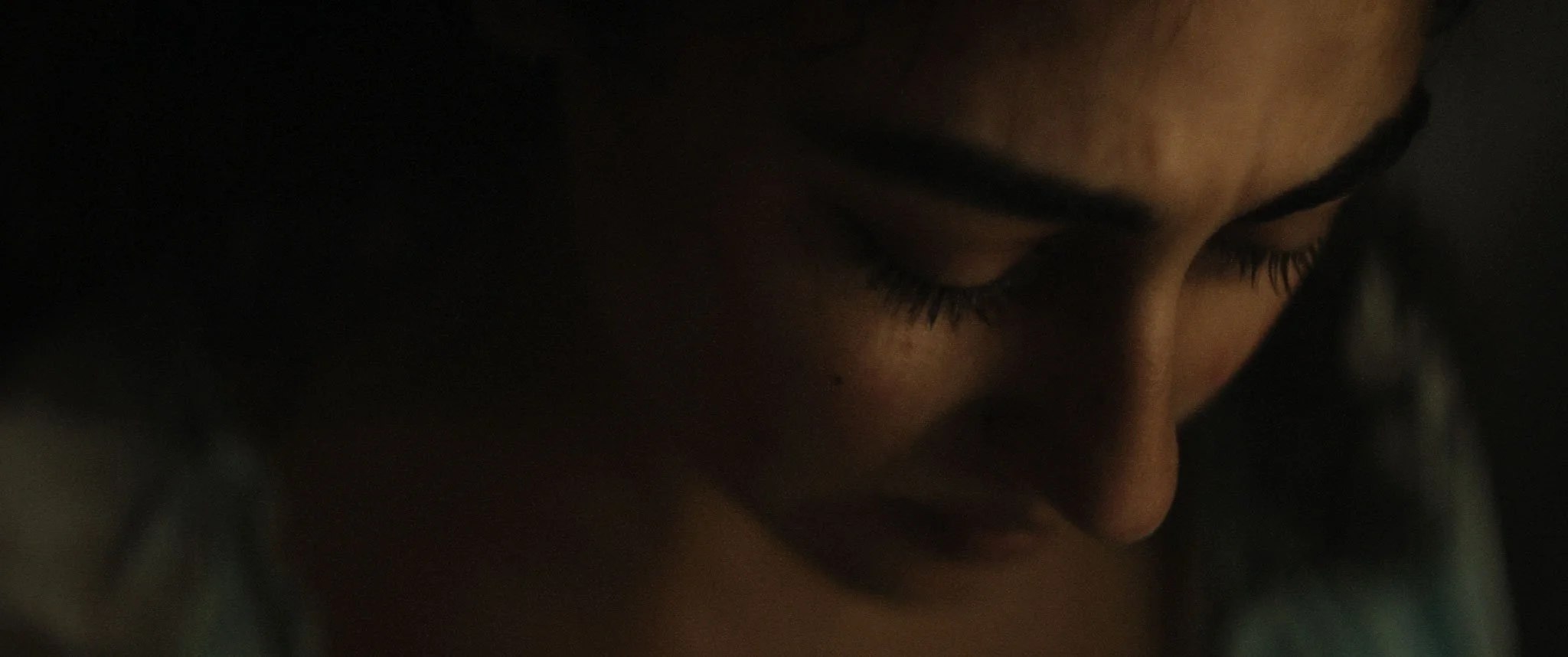
The Woman in the Wardrobe (2024)
When Ruby Phelan worked with her mum on the maternity unit as a side job while at drama school, the director didn't expect the role to come full circle years later, when her mum would provide support for the birthing scene in Phelan’s new film about women’s reproductive rights in warzones.
But that’s exactly what makes The Woman in the Wardrobe so powerful. The seven-minute feature follows Nadiya (played by Afsaneh Dehrouyeh), a young woman who finds sanctuary inside a wardrobe while giving birth to her daughter in an ongoing conflict.
It’s a timely collaboration between Phelan and producer Cheri Darbon, as part of their roles as Activists in Residence at the Feminist Centre for Racial Justice. Based at SOAS in London and headed by Kenyan professor Awino Okech, the center explores feminist research on power, protest, and change from a racialised perspective.
“Women's birthing rights are not being talked about,” Phelan tells Bad Gal Film Club, when we meet after the film’s screening in London. “That's something that I'm incredibly passionate about as a creator: using narrative cinema in order to talk about female issues.”
For Phelan, the film was a vehicle to bring a human element to these conflicts. “A lot of the time, the human story element is what's missing from these kinds of slightly more political spaces, whether that's UN summits and in Parliament,” she says.
“It's just statistics, and it's not human. By becoming - as somebody described it to me - “intimately epic” - going into a very contained space and having something happen - the whole environment, even though it's contained, becomes an entire landscape that you could be in.
“So I think the intimate epicness of the piece allows us to see how it's so much bigger. Having this human story at the center allows us to then start to talk about everything that's going on politically, and start to talk about the fact that women's bodies are always secondary in these situations, and the fact that, like women, this is never going to go away, unfortunately.”
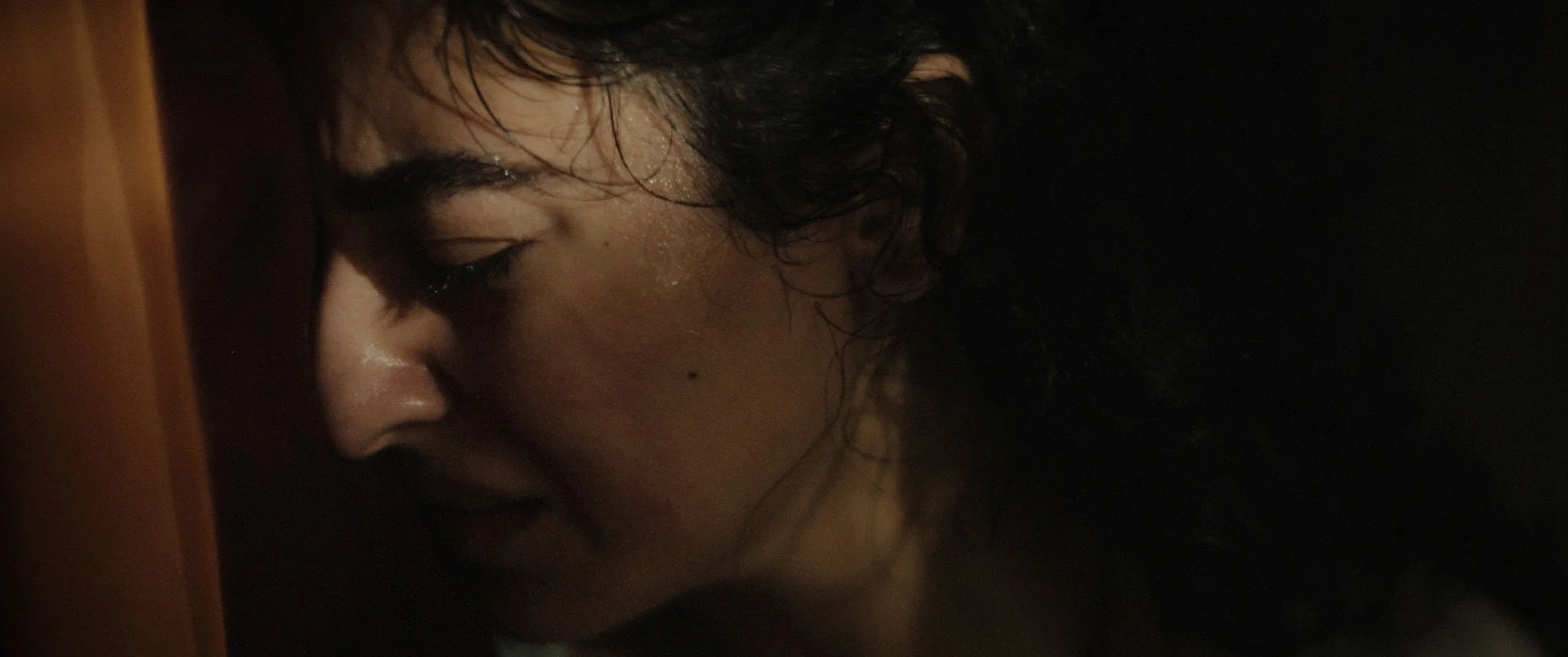
The Woman in the Wardrobe comes during an unprecedented era of global conflict, with the devastating wars in Gaza, Sudan, and Ukraine.
According to the UNFPA - the United Nations sexual and reproductive health agency - around 800 women die everyday from preventable causes related to pregnancy and childbirth - an estimated 500 of which are deaths in countries with humanitarian crises and conflicts.
Phelan and Darbon knew they wanted to make a tangible difference when producing The Woman in the Wardrobe, so they collaborated with the UNFPA to supply emergency birthing kits to women in global conflict and also to train midwives to go out to different women in humanitarian crises.
Phelan’s urge to center the female narrative also extended to the set: During the filming of The Woman in the Wardrobe, the production team was predominantly women, including all the heads of production and heads of department.
Afsaneh also had an intimacy coordinator, and Phelan’s mum was the midwife consultant. “It was a really amazing collaboration between [Afsaneh] and my mum, and to be able to witness that was really cool,” she says.
“We planned out the sequence of the contractions. So it's very accurate in that it's got that stamp of approval from a midwife.”
“We all felt like we were vessels for it to be carried forwards. And I think that there was a shared kind of, like uterus bonding,” she says (Phelan describes the wardrobe as a “vicarious midwife”).
The film has no dialogue, and is instead filled with the sounds of Nadiya’s birthing screams, and the bombs that rain around her, a choice Phelan purposely made in the filmmaking process.
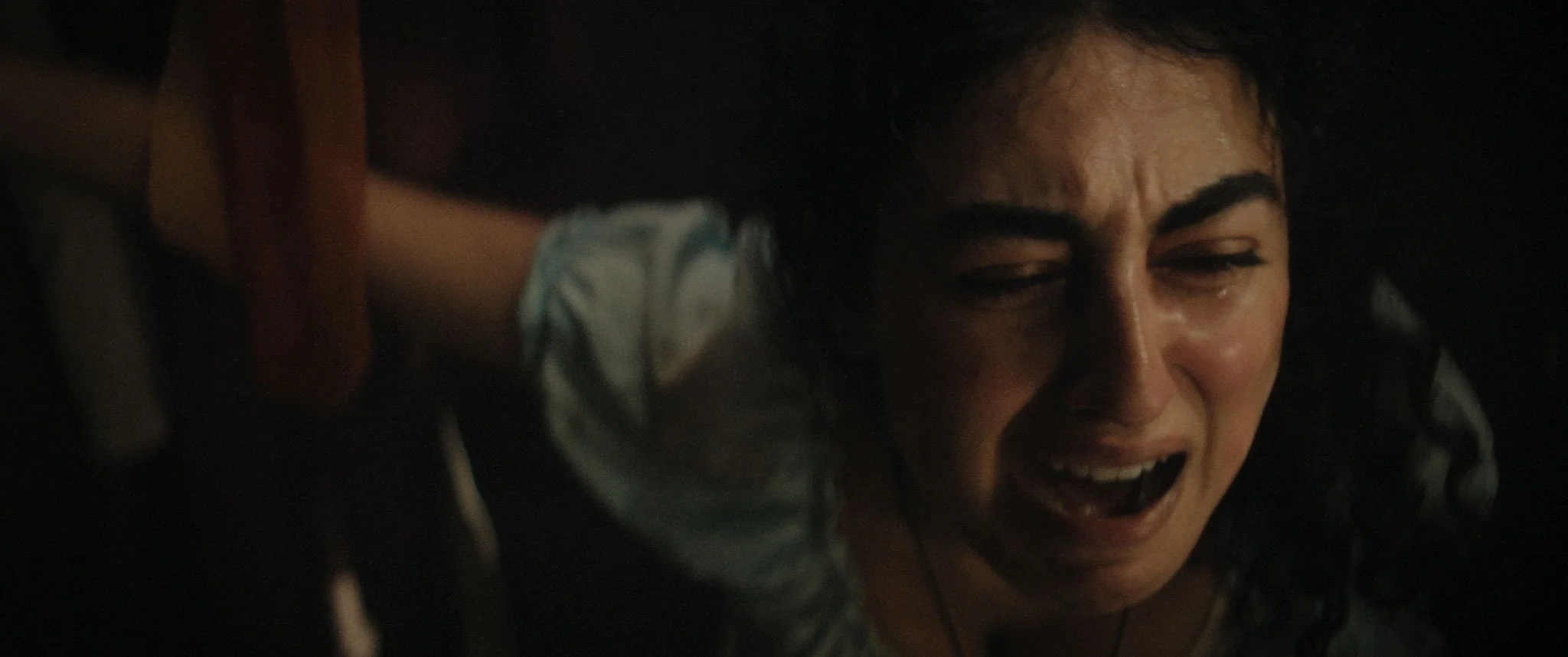
“[The film] can speak to so many different audiences,” she says. “It's something that's totally universal in the way that we're all here because somebody gave birth to us, in whatever way that is.”
“I feel really proud of the fact that as filmmakers, we can straddle that world between real life policy change and cinematic storytelling.”
Phelan and Darbon hope the film will be a “conversation opener”, and are looking to get it screened in Parliament, and at the UN summit, alongside film festivals and humanitarian festivals.
“Putting it in front of people that are not just necessarily cinema lovers and people that love film can really actually make policy change and shift things for these women,” says Phelan.
“I feel really proud of the fact that as filmmakers, we can straddle that world between real life policy change and cinematic storytelling.”
Phelan is currently writing her second feature, which explores characters that are “dark and gritty, and very female, and dirty and tackling taboos”. But for now, she’s eager to share The Woman in the Wardrobe to the world to raise awareness.
“This is such an important and urgent story. I think it's very easy to be complacent, and think that no one needs to hear this, but actually somebody really does out there. And if it's really true to you, then it really needs to be told.”
It costs £4 to send a birthing kit - which has the potential to save two lives - to a woman in conflict. You can donate here.
To keep up to date with where ‘The Woman in the Wardrobe’ is screening, follow Ruby Phelan and ‘The Woman in the Wardrobe’ on Instagram.